What's the vibe of Varsity Lakes?
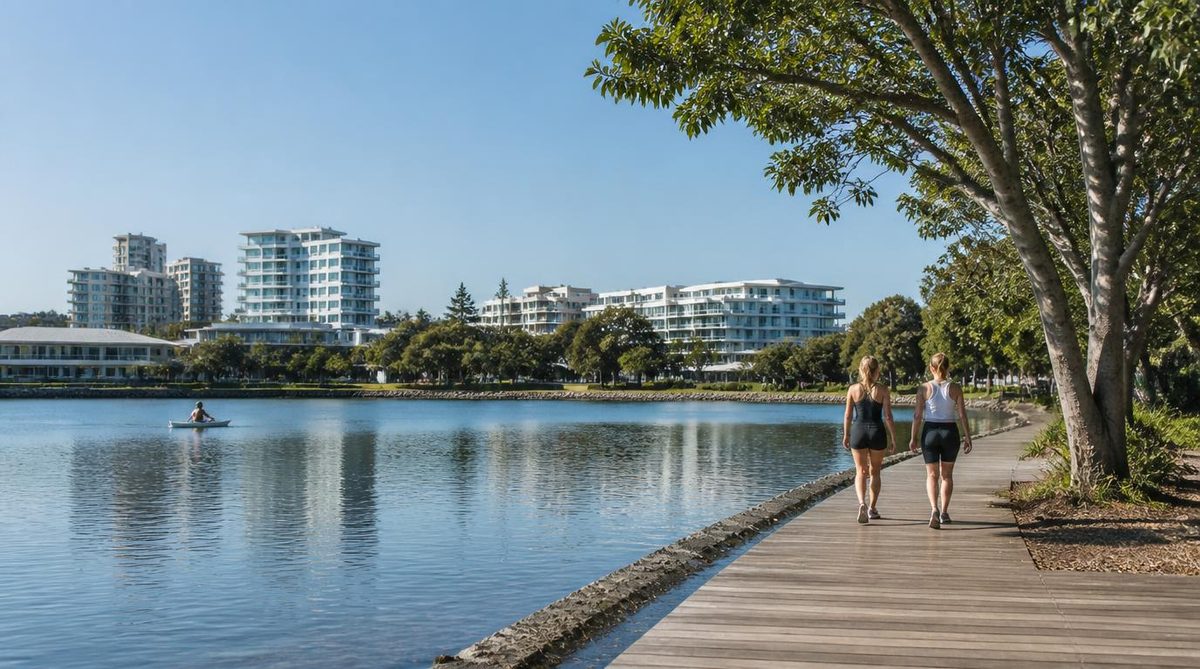
Varsity Lakes has a calm, modern and mostly residential vibe. Water, green space and planned neighbourhoods give much of the suburb a settled feel. Schools and study bring bursts of youthful energy. Market Square adds a quietly social pocket, while Varsity Lakes railway station creates a more functional commuter rhythm.
The key point is that Varsity Lakes does not feel the same from one street to the next. Near the lake, the mood can be slow and open. Around local centres, it feels busier and more social. Near education areas, the weekday pace rises and falls with class times. The station precinct is shaped by people arriving, leaving and moving through.
This makes Varsity Lakes feel more like an everyday neighbourhood than a visitor destination. It sits within the Gold Coast, Queensland, but its mood is far removed from the bright tourism energy many people link with Surfers Paradise. The suburb feels local, lived-in and useful. Its livelier moments tend to be contained within certain pockets rather than spread across the whole area.
What does Varsity Lakes feel like at first?
The first impression is often one of order and calm. Modern homes, established residential streets and planned public areas give the suburb a contemporary look. It does not feel like an old coastal village, a dense city centre or a holiday strip. Its identity comes from ordinary daily life.
That ordinary quality is part of its personality. People travel to school, stop for coffee, use local services and pass through shared outdoor spaces. Activity has a purpose. You are less likely to feel surrounded by visitors searching for attractions. You are more likely to notice routines playing out around you.
Calm does not mean empty. A quiet residential street may sit close to a busy road or a local centre. An education precinct can have plenty of movement during the day, then settle once students leave. The suburb changes over short distances, so a quick drive along one road can give a narrow view.
The built setting also affects the mood. Varsity Lakes looks planned rather than pieced together over many decades. That can make it feel neat, practical and modern. Some people will enjoy that clear suburban structure. Others may prefer the older shopfronts and looser street pattern found in more established areas. This is a question of atmosphere, not a verdict on which style is better.
The clearest description is calm and residential, with contained pockets of movement. It suits the idea of a Gold Coast suburb where daily life takes the lead and tourism stays in the background.
How do the lake and green spaces shape the mood?
Water and greenery soften the developed setting. In the lakeside and parkland pockets, open views can make the area feel less enclosed than a standard suburban street. Paths, planted edges and stretches of water create a visual pause between buildings and roads.
The effect is strongest when you are close enough to experience it. A person walking beside the lake may describe Varsity Lakes as serene and spacious. Someone who only sees an inland street or a main road may come away with a more practical impression. Both views can be accurate because access to the lakeside atmosphere is uneven across the suburb.
The lake is therefore more than a name, but it is not the backdrop to every home or daily trip. Some pockets feel closely tied to water and parkland. Others read as modern residential areas with the lake largely out of sight. This difference matters when someone expects the entire suburb to feel like a waterfront enclave.
The quieter outdoor areas also reveal the suburb's gentler pace. Movement tends to come from walkers, people spending time outside and residents passing through their normal routines. These settings feel removed from the sharper flow around shops, schools or transport points, even when they are nearby.
Sound can change the impression too. Beside open water or within a green pocket, traffic and commercial activity may feel less dominant. On a busier road, vehicles and daily movement can take over the scene. The suburb's mood depends on what surrounds you at that moment.
To understand this part of Varsity Lakes, compare a lakeside or parkland setting with an inland residential street. That contrast shows how much the water shapes the suburb's image without defining every part of it.
Why does the suburb feel younger and busier on weekdays?
Education is visible in the daily rhythm of Varsity Lakes. Schools and study activity bring students, families and staff into parts of the suburb. Around arrival, departure and class periods, those areas can feel active even though the broader residential mood remains calm.
This energy is different from nightlife or tourist activity. It is scheduled and daytime focused. Footpaths become busier. Drop-off areas see more movement. Cafes and nearby services may feel more animated as people fit errands and meetings around study routines.
Outside those periods, the same pocket may feel much quieter. That swing explains why two visitors can form different views of Varsity Lakes. One might arrive during a weekday rush and see a young, active suburb. Another might visit later and find a settled residential area.
The youthful tone does not cover the whole suburb. It appears most clearly near places linked with education and along the routes people use to reach them. Move away from those points and the pace can drop quickly.
A hypothetical visit makes the contrast clear. Imagine walking through an education-adjacent area before classes start, then returning after the main daytime activity has ended. The buildings remain the same, but the number of people and the purpose of their movement change the feel. This is why timing matters as much as location.
Education adds life without turning Varsity Lakes into an entertainment precinct. It gives the suburb a family-focused and active daytime layer that sits over its quieter residential base.
Where does Varsity Lakes feel most social?
The social side of Varsity Lakes is concentrated around local centres, especially Market Square and nearby businesses. This is where coffee, casual dining and personal services bring people together in a setting that feels more public than the surrounding residential streets.
The mood is contemporary and convenient. People can meet for coffee, have a meal or combine a social stop with an errand. The area offers a change of pace without feeling like a major dining or nightlife district. Activity is present, but it usually remains tied to local use.
That distinction helps explain the phrase quietly lively. Varsity Lakes can support social contact without becoming loud or crowded across the whole suburb. Its busiest pockets are limited in size. Walk a short distance away and the setting may return to homes, quieter streets and passing local traffic.
The time of day changes this pocket as well. Coffee hours may bring a quick, casual flow. Lunch can create a steadier hum. Early evening may feel more social as people dine or meet after their daily commitments. Later at night, it should not be assumed to match the energy of the Gold Coast's main entertainment areas.
Individual venues and events can change, so the lasting point is the role of the centre itself. Market Square gives the community a shared place to gather. It adds personality to a suburb that might otherwise seem purely residential when viewed from its quieter streets.
This is also where the modern character becomes more visible. Shopfronts, outdoor meeting points and service businesses create a polished neighbourhood-centre feel. It is social on a local scale, with enough activity to break the calm but little sense of a tourism crowd.
Visit during coffee or early-evening hours if you want to judge this side of Varsity Lakes. A pass through at a quiet time may understate how people use the area.
How does the station precinct change the atmosphere?
Varsity Lakes railway station gives its part of the suburb a movement-focused feel. People arrive, wait, leave and connect with other parts of their day. The atmosphere is practical because the station serves a clear transport purpose.
This pocket can feel more transient than the lakeside and residential areas. Many people are there to pass through rather than remain. Entrances, pick-up points and routes leading away from the station shape the scene around departures and arrivals.
The wider connections toward other Gold Coast areas and Brisbane help explain why the station forms its own micro-vibe. The mood centres on timing, access and onward movement. It has less of the relaxed visual pause found near the water and less of the social focus found around Market Square.
That does not make the station precinct a fair summary of Varsity Lakes. Arriving by train can give a visitor an efficient, commuter-led first impression. The suburb's slower character becomes clearer after moving into its residential or green-space pockets.
The reverse can also happen. Someone who stays near the lake may miss how much daily movement exists around transport routes. Seeing both settings gives a more complete picture of the area's working rhythm.
Commuting hours are the best time to understand this contrast. The station's role is clearest when people are actively using it. At a quieter hour, it may reveal little about the pace it brings to the surrounding pocket.
How can you get an honest feel for Varsity Lakes?
Judge Varsity Lakes by pocket and time of day, not by one drive-through. Its identity comes from the contrast between calm residential areas and focused centres of activity.
Start near the lake or a green-space pocket. Notice the width of the view, the level of movement and how closely the surrounding streets connect with the water. Then visit an inland residential area. This will show whether your first impression came from the suburb as a whole or from one especially scenic setting.
Next, see an education-adjacent pocket during a weekday. You do not need to assess the schools themselves. Watch how study routines change pedestrian movement and the general pace. Return outside the main daytime period if you want to see how quickly that energy falls away.
Spend time around Market Square when people are likely to stop for coffee, food or local services. Look for the scale of the activity. The question is whether its low-key social feel matches what you want, not whether it competes with a major entertainment district.
Finish at the railway station during a commuter period. Compare its functional pace with the slower parts you visited earlier. This final contrast makes it clear why Varsity Lakes cannot be reduced to one mood.
A useful vibe check should cover these distinct settings:
- A lake or green-space pocket: to experience the serene visual character linked with the suburb's name.
- An inland residential street: to see the quieter everyday setting away from the main centres.
- An education-adjacent area: to observe the suburb's weekday energy.
- Market Square: to assess its convenient and quietly social side.
- The station precinct: to understand the commuter rhythm that shapes one edge of daily life.
Visit those pockets at the times when people actually use them, then decide which version of Varsity Lakes feels most like the place you expected to find.